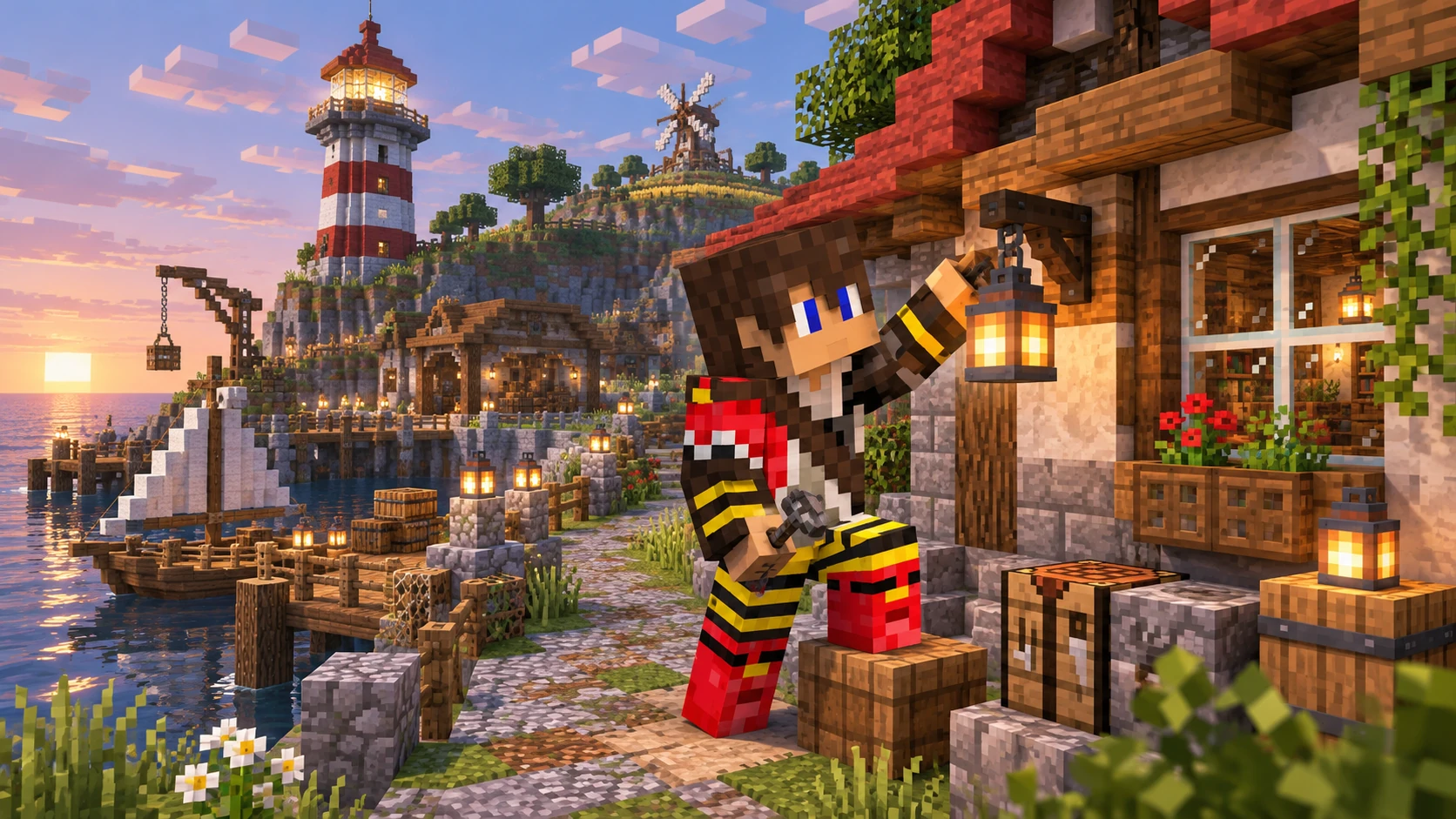
A little cottage beside a lighthouse can suggest a life before anyone writes a book about it. The path leads to the shore, supplies sit near the landing and the building faces the place it serves.
Minecraft SMP base design can tell a story through practical choices. If the characterful places in a Hermitcraft like world appeal to you, begin with a purpose your own build can express.
- Give the place an everyday purpose
- Let the setting explain the layout
- Use a few repeated design clues
- Make storage and work areas part of the idea
- Allow the design to record your own progress
- Share the world without scripting other people
- Frequently asked questions
Finish this sentence first
“This place exists because…” is a useful design prompt. The answer can be as simple as a gardener wanting a workshop beside the greenhouse.
Give the place an everyday purpose
Choose a role for the building beyond being somewhere to put chests. A coastal workshop, a forest gardener’s home or a hillside observatory suggests different spaces and materials.
Keep the idea broad enough to support normal play. You still need storage, work areas and a way to move through the building. The story should help you make those decisions rather than make the home inconvenient to use.
Let the setting explain the layout
Think about why the entrance faces a particular direction and where paths lead. A riverside home might connect to a permitted landing; a hillside building might have rooms at different levels.
Work within your own claim and the relevant district theme. Our location guide covers terrain and neighbours. A convincing setting does not excuse changing someone else’s land.
Use a few repeated design clues
Choose details that belong to the purpose: a planted work area, a small preparation bench or a particular shape repeated across the site. Repetition helps separate buildings feel connected.
You do not need to fill every surface. A few deliberate choices are often easier to read than dozens of unrelated decorations. Test the main materials with the palette tools, then check them in your actual surroundings.
Make storage and work areas part of the idea
A building can remain useful while showing character. A workshop might organise its supplies visibly, while a small map room can give a collection a natural home.
Keep access practical and follow entity and redstone limits when using displays or machinery. Our storage guide helps you plan the functional side before adding more decorative space.
Allow the design to record your own progress
An extension can show that a workshop grew. A new garden can connect an older house to a recently finished project. Your actual building history can give the place character over time.
Take occasional screenshots so you can see those changes. If you enjoy adding written lore, use it as an extra layer, but the paths, rooms and views can already carry much of the idea.
Share the world without scripting other people
If your plans involve neighbours or a shared story, ask whether they want to participate and agree what it means. Keep fictional ideas separate from real ownership and permissions.
TogetherCraft is an independent adult community, separate from Hermitcraft. Follow its Rules and district expectations while developing your own place. A story is an invitation to creativity, not permission to change another player’s build.
Frequently asked questions
Do I need written lore to give a base character?
No. Purpose, routes and repeated details can suggest a story visually.
Can a small starter home have a story?
Yes. A clear purpose can make even one room and a garden feel distinctive.
Should decorative ideas take priority over storage access?
Plan both together. A home should remain comfortable to use during ordinary play.
Can I include a neighbour’s build in my story?
Ask whether they want to participate and agree any changes or shared elements first.
Browse TogetherCraft’s community snapshots for inspiration, then explore the Guide and our Discord if you would like to join.