One of you wants to build a cosy cottage. The other has already started describing a castle, railway and underground storage system. Playing Minecraft together does not require you to agree on the size of every roof, but choosing the right shared project helps.
Good Minecraft SMP projects for couples and friends give everyone something they enjoy doing, a clear area to work on and a useful first milestone. You can build together while keeping separate homes, supplies and personal ideas.
Here are eight projects for two players or a small group, with suggestions for dividing the work. SMP means Survival Multiplayer, so check the server’s rules and land arrangements before starting.
- Choose a project you both want
- Eight projects for couples and friends
- Divide the work without losing the fun
- Make different schedules work
- Agree ownership and supplies
- Playing together on TogetherCraft
- Frequently asked questions
Choose a project you both want
Start by asking what each person would enjoy in the next few sessions. Building, decorating, gathering and exploring can all contribute, but avoid assuming one person will always collect materials while the other makes every design decision.
Choose a first stage you can describe in a sentence: “Two cottages with a path between them” or “A small dock with a covered seating area”. Keep the larger ideas on a list you can return to after that part is finished.
You can share a project and keep your own base
Separate homes can give everyone space for different styles and routines. A shared path, garden or meeting place provides a connection without making every building decision a group decision.
Eight projects for couples and friends
1. Neighbouring cottages with a shared garden
Keep your own homes and connect them with a garden you design together. Different roof shapes and interiors give each person room for their own style; a repeated path material can tie the area together.
Divide the work: Each player builds their own cottage. Divide the agreed garden into a seating area and planting beds, or work on those parts together.
First milestone: Finish both entrances and the path between them before expanding the garden. Agree the location and boundaries first, including permission to build closer where required.
2. A harbour with separate buildings
Give a stretch of permitted shoreline a shared purpose. One player might build a boathouse while another makes a warehouse or lighthouse. A common dock palette keeps the waterfront coherent without requiring identical buildings.
Divide the work: Give each person one building and agree the dock layout together. In a larger group, someone who enjoys landscaping could shape an agreed section of shore.
First milestone: Complete one dock and two small buildings. Leave the rest as an optional expansion rather than clearing an enormous waterfront immediately.
3. A railway between independent bases
A railway gives separate homes a shared connection. Design a station at each end in the owner’s preferred style, then choose a consistent treatment for the track and any stops.
Divide the work: Each player can build their station, then share the route work. Decide who supplies rails, who builds bridges and who checks the finished journey.
First milestone: Finish one agreed section of track and test it before extending. Get permission for every affected claim and check the server’s transport rules before starting.
4. A village with individual plots
Choose an overall setting, such as a woodland settlement or coastal village, and let each person design one building. This works well when people want to contribute at different times.
Divide the work: Agree the roads and palette, then allocate building areas with clear ownership. Each person can complete a home or workshop while shared spaces remain a separate task.
First milestone: Finish two buildings and a small square. If you later add friends, agree the new areas before they start changing existing work.
5. A museum of shared adventures
Create galleries for memorable trips, collections or favourite builds. A room can tell the story of an expedition without needing an entire museum to be ready first.
Divide the work: One player can design a gallery while another writes labels or prepares exhibits they own. Rotate the roles so everyone gets a creative task.
First milestone: Complete one small exhibition. Agree whether each item is a gift or a loan, who may move it and which supplies remain private.
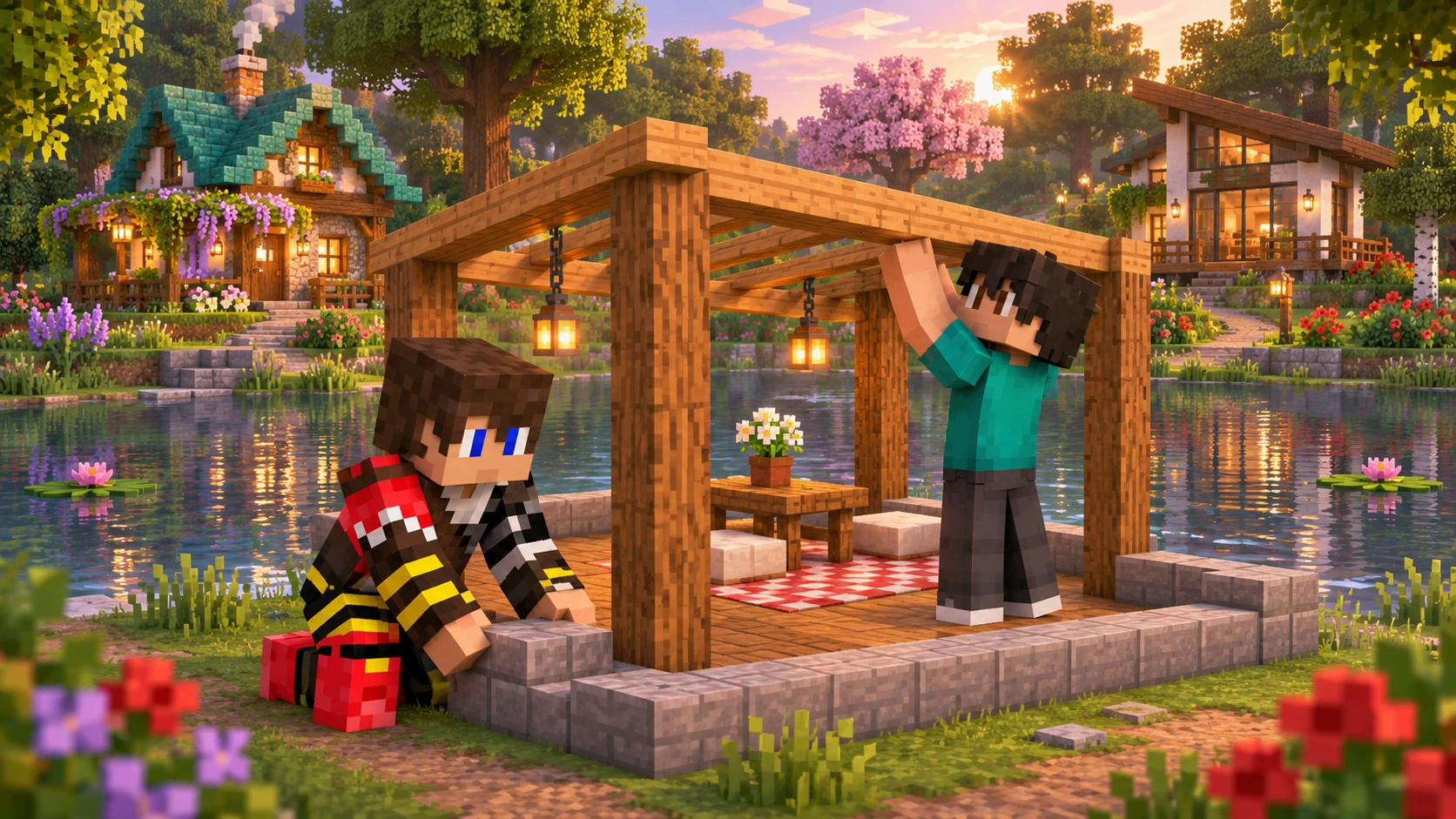
6. A lakeside pavilion and fishing spot
A shelter, seats and a short fishing dock can make a satisfying small project. It gives you somewhere to spend time together even when you do not feel like taking on a larger build.
Divide the work: One person designs the roof and supports; another creates the path and waterside seating. Choose a palette together before placing the main structure.
First milestone: Finish the shelter and two usable fishing positions. Our fishing guide can help you prepare equipment for a relaxed session afterwards.
7. A shared workshop with personal storage
Build a practical meeting point for preparing projects. It can contain an agreed work area and clearly separated supplies, giving you somewhere to plan without combining every item you own.
Divide the work: Let each player design a labelled personal storage bay. Agree which workstations and containers are communal, and who will replace shared materials.
First milestone: Finish one work area and the storage labels before moving supplies in. Our storage guide offers ideas for keeping categories manageable.
8. A castle built as connected sections
For a more ambitious project, treat a castle as a collection of smaller builds. Towers, gardens and halls can have different owners or responsibilities while sharing a common design.
Divide the work: Choose one sample wall and roof style, then give each player a complete section. Discuss the connections before making changes where sections meet.
First milestone: Finish one useful tower and courtyard. Follow our megabase planning guide to estimate materials and develop later stages.
Divide the work without losing the fun
Ask what people want to try rather than assigning roles by who is already best at them. Someone who normally gathers supplies might want to design the roof this time. Someone who loves building might welcome a resource trip as a change of pace.
- Agree the essentials. Choose the purpose, rough size and a few repeated materials.
- Leave room for personal choices. Interiors or separate buildings can suit different tastes.
- Define the task. “Build this agreed garden area” is clearer than “Do the landscaping”.
- Swap roles when you want. Materials and design work do not have to belong to the same person throughout.
- Ask before revising someone’s section. Discuss the change before replacing work they have finished.
For more options, browse our Minecraft SMP build ideas. You can adapt a small project into a shared one simply by giving each person a worthwhile part.
Make different schedules work
A project can continue even when you are not always online together. Agree which parts each person can work on independently and which decisions need a conversation first. Save bigger design choices for a time when everyone affected can contribute.
Leave a short progress note: what you finished, which materials you used and what is ready to do next. A screenshot can help explain a proposed change without making someone search the whole site.
Keep a small task available for shorter sessions, such as furnishing one room or completing one section of path. If someone is busy, avoid turning their unfinished part into a source of pressure. Agree whether it should wait or whether they would like help.
Our guide to Minecraft for busy adults has more ideas for fitting play around everyday life.
Agree ownership and supplies
Before building, decide whose land is being used, who owns each structure and which materials are being shared. Label containers clearly, and ask before using somebody’s personal equipment. Playing as a couple or being close friends does not remove the need for permission.
Choose a site that works for the group and respects neighbouring claims. Our base location guide covers space, travel and terrain. On TogetherCraft, check the current claiming distances and ask permission before building closer to another player’s claim.
Also agree how changes and longer absences will be handled. A shared plan does not override the server’s inactivity rules, and it does not authorise taking over someone’s belongings. Contact staff if ownership becomes unclear.
Shop rules are different
TogetherCraft does not allow shared or jointly owned shops. The projects in this article concern agreed builds and activities, not a way around Shopping District ownership rules. Read the Rules before planning any trading business.
Playing together on TogetherCraft
TogetherCraft is an independent, whitelisted adult Minecraft community for Java Edition. Its main Survival world has no scheduled resets, giving you time to develop personal bases and agreed projects alongside one another.
Read the Guide and Rules before choosing land or sharing supplies. Keep permanent projects out of temporary resource worlds, and check claiming and inactivity requirements before committing to a large build.
If you enjoy the independent bases and shared activities associated with Hermitcraft style servers, you can bring those interests into your own projects. You do not need to build at the same pace or like exactly the same things.
To get started, join the TogetherCraft Discord and follow the whitelist application instructions. Each player needs their own approval; applying with a partner or friend does not guarantee acceptance. You can also read our server etiquette guide before settling into a shared world.
Frequently asked questions
What is a good Minecraft project for two players?
Try neighbouring cottages, a small dock or a pavilion with a garden. Give each player a part they enjoy and choose a small first milestone before expanding.
Do we need to share a Minecraft base to play together?
No. Separate bases can be connected through agreed paths, railways or a shared meeting place. Follow the server’s land rules and get permission for any connections.
What if we prefer different building styles?
Use a few shared materials for paths or communal areas, then give each person freedom inside their own building or section. Choose the parts that need a consistent style before starting.
Can a project work if we play at different times?
Yes. Agree tasks that can be completed independently, leave progress notes and save decisions affecting everyone for a conversation.
Can friends share a shop on TogetherCraft?
No. TogetherCraft’s current Shopping District rules prohibit shared or jointly owned shops. Shared building projects must still follow the rules for the area and activity involved.
Does permission to share materials include every chest?
No. Agree which containers and items are shared. Personal supplies remain private unless the owner clearly gives permission to use them.
Can couples and friends apply to TogetherCraft together?
Each player must follow the whitelist application process and receive their own approval. Read the Guide and Rules, then follow the instructions in the TogetherCraft Discord.